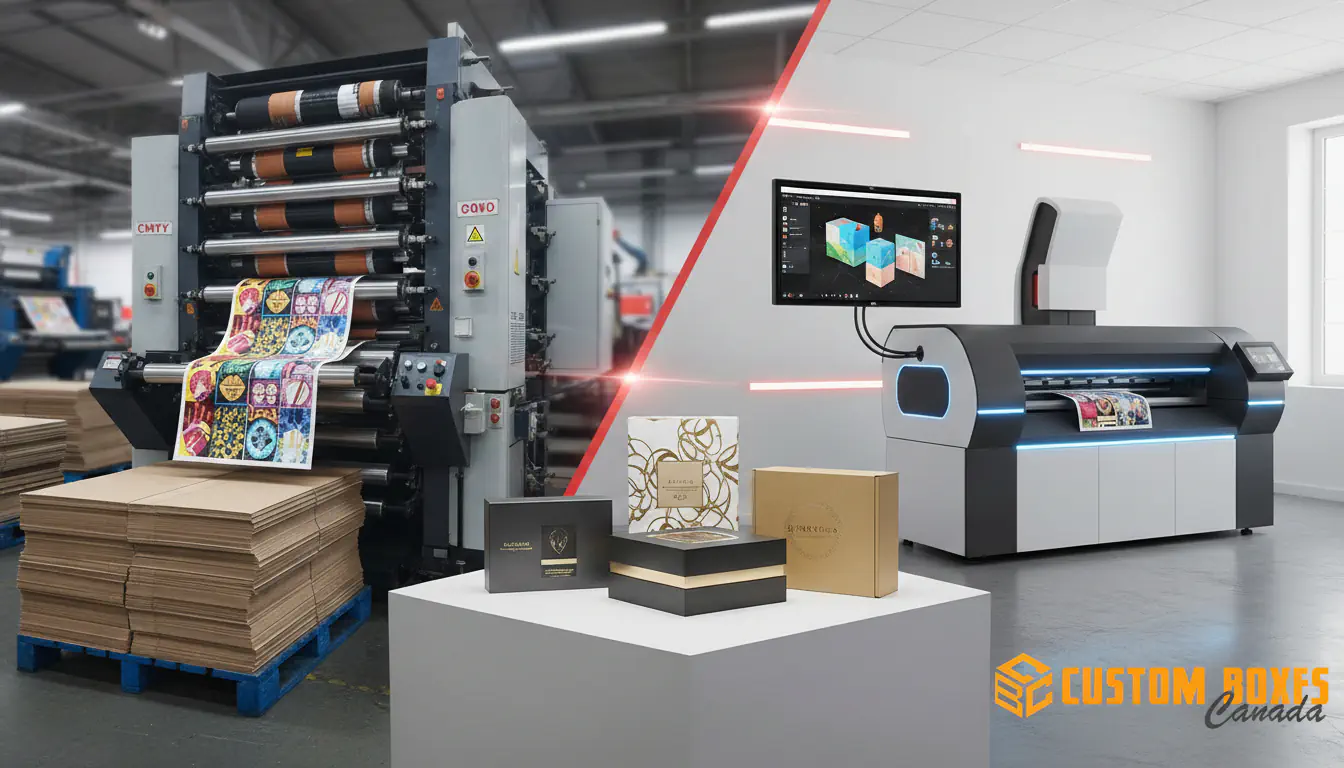
If you’re ordering custom printed boxes, one decision affects cost, quality, and turnaround more than almost anything else:
Offset printing vs digital printing.
Both can produce excellent packaging—but they are built for different order sizes and business needs. This guide breaks down the real differences so you can choose the right method for your box type, budget, and timeline.
Quick answer
-
Digital printing is usually best for small runs, fast launches, and flexible designs.
-
Offset printing is usually best for large quantities, premium consistency, and the lowest cost per unit at scale.
If you’re ordering custom boxes in Canada, choosing the right print method can save you money and avoid quality surprises.
CTA: Request a quote → (link your quote page
What is offset printing?
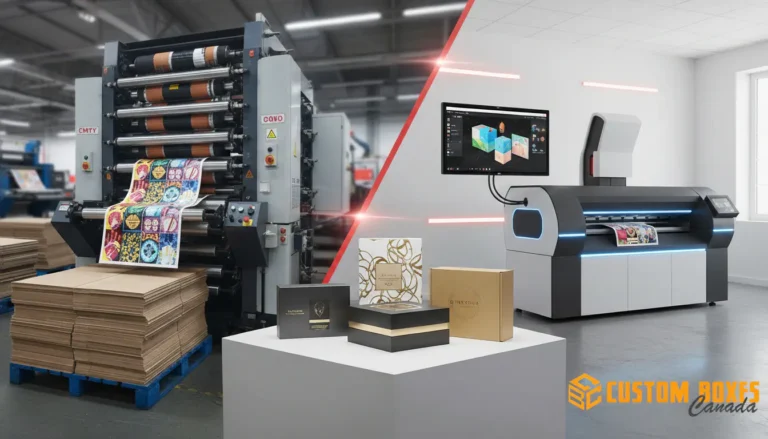
Offset printing is a traditional press method that uses printing plates to transfer ink to the packaging material. Because it requires setup (plates + press calibration), it’s typically used when you want high consistency and scale efficiency.
How offset printing works (simple version)
-
Plates are created for the design (often per color)
-
The press runs at high speed with consistent output
-
The per-unit cost drops significantly at higher quantities
Advantages of offset printing for custom boxes
-
Excellent consistency across thousands of boxes
-
Premium-looking results for custom boxes
-
Better economics for large orders (lower per unit at scale)
-
Often preferred for high-volume folding cartons and premium brand packaging
Limitations of offset printing
-
Higher setup cost (plates + press setup)
-
Longer lead time compared to digital
-
Not the best choice if you need only 100–300 boxes quickly
What is digital printing?
Digital printing applies your artwork directly from a digital file, without making printing plates. That’s why it’s commonly used for small quantities and quick turnaround packaging.
How digital printing works (simple version)
-
Your file is prepared and printed directly
-
Minimal setup = faster start
-
Great for short runs and variations
Advantages of digital printing for custom boxes
-
Lower setup cost (no plates)
-
Fast turnaround for short runs
-
Ideal for startups, seasonal products, test launches
-
Easier to update designs without restarting the expensive setup
Limitations of digital printing
-
At large quantities, per-unit cost often doesn’t drop as aggressively as offset
-
Depending on requirements, specialty color matching can be more limited than offset
-
Some premium finishes/material combinations may be more commonly paired with offset workflows
Offset vs digital printing: side-by-side comparison
| Feature | Offset Printing | Digital Printing |
|---|---|---|
| Best for quantity | Usually 1000+ (varies by spec) | Usually small–mid runs |
| Setup cost | Higher | Low |
| Unit cost at scale | Lower | Often higher at very large volume |
| Turnaround speed | Medium | Fast |
| Consistency at volume | Excellent | Very good |
| Best for | Retail volume, premium consistency | Small batches, quick launches |
If you’re still planning a budget, see our custom box pricing guide
Which printing method is best for your custom boxes?
If you’re a startup or small business
If you’re ordering lower quantities, testing packaging, or launching quickly, digital printing is usually the practical choice.
Best fit examples:
-
small subscription runs
-
new product launches
-
seasonal packaging tests
-
frequent artwork changes
If you’re ordering high volume for retail
If you need consistent color and finish across many units, offset printing is often the best long-term value.
Best fit examples:
-
retail product boxes (folding cartons)
-
large distribution runs
-
consistent brand colors across multiple batches
If you need premium presentation
For luxury packaging, the print method matters—but so do finishes (lamination, foil, emboss, etc.). Often, brands choose workflows that support premium consistency and finishing options.
If your priority is speed
If you need packaging quickly for a launch or restock, digital printing often wins because it has minimal setup.
Cost difference: offset vs digital printing in Canada
This is the part buyers care about most:
Digital printing cost behavior
-
Low setup cost
-
Great for short runs
-
Cost per unit may stay relatively steady as quantity increases
Offset printing cost behavior
-
Higher setup cost
-
But the cost per unit drops more as quantity increases
-
Best for scaling brands that order repeatedly
Rule of thumb:
If you’re ordering small quantities, digital often makes sense.
If you’re ordering large quantities, offset often becomes more cost-effective.
When should you switch from digital to offset?
A common upgrade path is:
-
Start with digital (test demand, validate packaging)
-
Switch to offset once your volume is stable and repeatable
You should consider switching when:
-
You’re reordering consistently
-
You need tighter consistency at high volume
-
Per-unit cost becomes your biggest priority
-
You want stronger finishing options across large batches
FAQs
Is offset printing better quality than digital?
Offset is usually chosen for high consistency at scale and premium repeatability. Digital can still look excellent, especially for smaller runs, but offset is often preferred for large retail production.
Is digital printing cheaper?
Digital can be cheaper for small quantities because the setup is low. Offset usually becomes cheaper per unit at higher volumes.
What is best for mailer boxes?
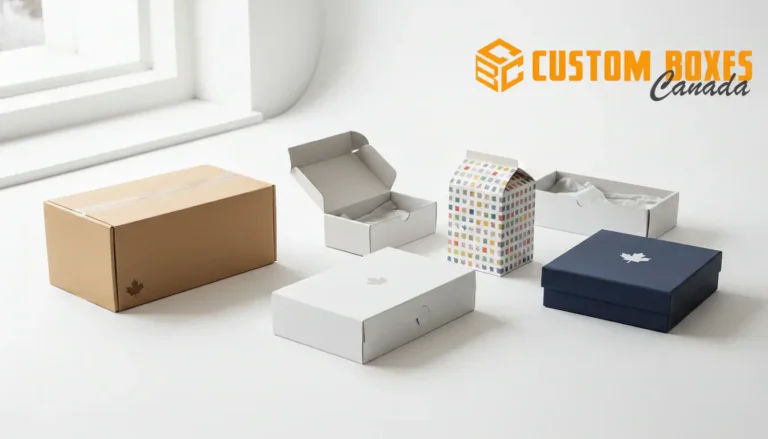
Mailer boxes are frequently produced with digital workflows for short runs and quick launches, but high-volume brands may use offset depending on specs and quantity.
What is best for retail product boxes?
Folding cartons for retail are commonly produced with offset workflows at higher quantities to maximize consistency and cost efficiency.
Which printing method should I choose?
If you tell a supplier your box type + size + quantity + print coverage + finish, they can recommend the best method based on cost and results.
Final recommendation
-
Choose digital if you need speed, flexibility, and small quantities
-
Choose offset if you need premium consistency and high-volume cost efficiency
Not sure which fits your order?