How to Choose the Right Box Strength for Shipping in Canada
When it comes to shipping products, the packaging you choose is just as important as the product itself. One of the most crucial decisions you’ll face as a business owner is selecting the right box strength. Poor packaging can result in damaged goods, unhappy customers, and costly returns. In fact, 30% of shipments worldwide experience damage due to weak or inappropriate packaging.
This guide will help you understand the significance of box strength in shipping, how to determine the right box for your products, and avoid common mistakes that could harm your business. Let’s dive in and ensure that your products reach customers in perfect condition — every time.
Why Box Strength Matters in Shipping
Choosing the right box strength is not just about keeping your products secure; it’s about making sure they arrive safe and sound without damage. Poorly chosen packaging leads to crushed goods, torn boxes, and the dreaded customer complaints. A common scenario? A customer orders fragile electronics, but they arrive at their doorstep in pieces because the box couldn’t withstand the handling during transit.
Statistic: According to a report by ISTA (International Safe Transit Association), 35% of shipping-related damages can be attributed to improper packaging. Many businesses overlook the importance of box strength, assuming any cardboard will do. But that assumption can cost you both in returns and lost customer trust.
In Canada, where shipping distances can be vast and weather conditions vary greatly, selecting the correct packaging is even more critical. Whether you’re shipping locally within Ontario or sending packages across provinces to British Columbia, a weak box could mean disaster.
What Does ECT and Burst Strength Mean?
Before you select a box, it’s important to understand the terminology used in packaging. The two main factors that determine box strength are the Edge Crush Test (ECT) and Burst Strength. Let’s break these terms down:
-
ECT (Edge Crush Test): This is a measure of how much weight the edge of a box can withstand before collapsing. Boxes with higher ECT ratings can handle more weight and stress. For example, a 32 ECT box can hold more weight than a 24 ECT box.
-
Burst Strength: Burst strength is the amount of pressure a box can withstand before it bursts open. It’s often measured in pounds per square inch (psi). This is particularly important for shipping heavy or fragile items, such as glass or electronics, which need added protection.
ECT vs Burst Strength
In general:
-
ECT is more relevant for light and medium-weight products.
-
Burst strength is more suitable for heavy and fragile products.
32 ECT vs 200 lb Test: Which is Stronger?
One of the most common questions businesses have when choosing box strength is the difference between a 32 ECT box and a 200 lb test box. Here’s a quick breakdown:
| Box Strength | Best For | Weight Capacity |
|---|---|---|
| 32 ECT | Light items (books, clothing, toys) | Up to 10 lbs |
| 200 lb Test | Heavy products (electronics, machinery, large items) | Up to 30 lbs+ |
-
32 ECT Boxes: Ideal for light- to medium-weight products. They offer sufficient protection for items like books, clothing, or electronics that aren’t too heavy.
-
200 lb Test Boxes: This rating is designed for heavy-duty packaging. 200 lb test boxes are strong enough to handle more weight and are perfect for products like furniture, electronics, or machinery.
Choosing the right one is all about knowing the weight and fragility of your items. For example, shipping a TV requires a 200 lb test box, whereas shipping clothing will work perfectly fine with a 32 ECT box.
Which Box Strength for Light, Medium, and Heavy Products?
Selecting the right box strength depends on the weight, fragility, and size of your products. Here’s a general guideline:
-
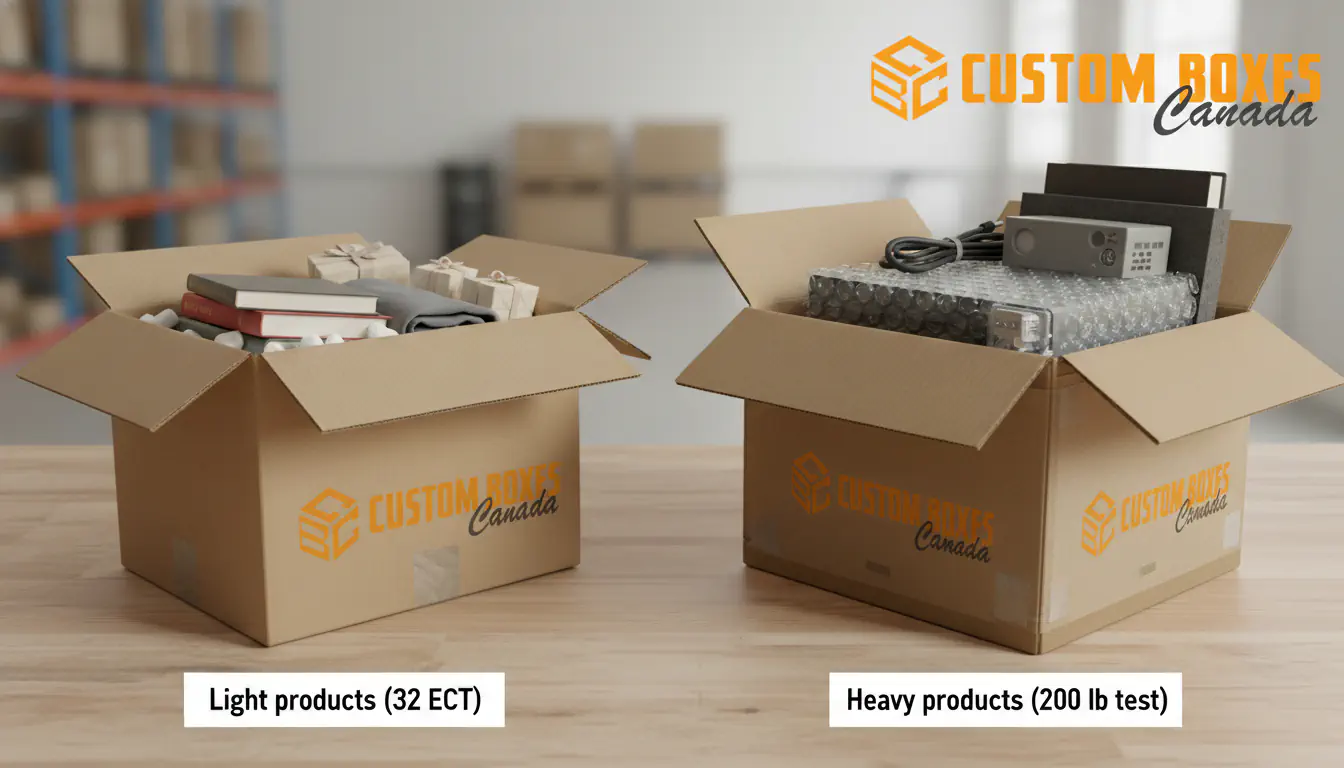
Light Products: Items like books, small gadgets, or clothing typically require 32 ECT boxes. These boxes can handle lighter items without crushing or breaking.
-
Medium Products: For items like shoes, small appliances, or non-fragile items weighing around 10-20 lbs, opt for 44 ECT boxes. These provide extra durability for heavier products that require additional protection.
-
Heavy Products: Items like electronics, glassware, furniture, or machinery require 200 lb test boxes. These boxes are designed to withstand heavy pressure and prevent crushing, ensuring that your fragile products reach their destination intact.
Example: Imagine you are shipping a ceramic mug. You wouldn’t want to use a 32 ECT box because the mug could easily get damaged. Instead, you would opt for a 44 ECT or 200 lb test box to give it the support it needs.
Common Shipping Mistakes Canadian Businesses Make
Even experienced businesses can make mistakes when it comes to packaging, leading to costly returns and customer dissatisfaction. Here are some of the most common packaging mistakes:
-
Mistake 1: Using Under-Strength Boxes for Heavy Items
Using a 32 ECT box for a heavy item like a TV is a disaster waiting to happen. Choosing the right strength for the product’s weight is essential to ensure safety. -
Mistake 2: Not Considering Distance or Weather Conditions
Shipping across Canada can mean dealing with extreme temperatures. For example, winter shipping in Canada can cause cardboard boxes to become brittle. It’s essential to account for weather conditions when choosing box strength. -
Mistake 3: Not Testing Boxes Before Large Shipments
Many businesses fail to test their packaging before sending out large orders. It’s critical to do a stress test on your boxes to ensure they can withstand the rigors of shipping.
How Weather and Long-Distance Shipping Affect Box Strength in Canada
Canada is known for its harsh winters and humid summers. These weather conditions can affect the integrity of your packaging. Cold temperatures can make boxes brittle, while humidity can weaken adhesives.
In addition, long-distance shipping can expose boxes to rough handling, which requires stronger packaging. Ensure that your packaging is weather-resistant and durable enough to withstand the Canadian climate.
Statistic: 40% of shipping damage in Canada occurs in regions with fluctuating temperatures, so packaging needs to be robust enough for extreme conditions.
Final Checklist for Choosing the Right Box Strength for Your Shipments
Before you make your final packaging decision, consider this checklist:
-
Product Weight: What is the weight of the item? Choose a box that can safely hold it without risk of collapsing.
-
Destination: Is the box going across the country or just a short distance? Longer distances often require stronger boxes.
-
Climate and Weather: Will the box be exposed to cold, heat, or humidity during shipping? Consider how the weather will impact the box.
-
Box Type: Consider whether you need die-cut mailer boxes, RSC boxes, or custom-sized boxes for your product.
-
Testing: Test your boxes before large shipments to ensure they hold up under stress.
Conclusion
Selecting the right box strength is more than just a technicality — it’s an investment in your product’s safety and your customer’s experience. By choosing the correct box strength, you can significantly reduce the risk of damaged goods, returns, and lost sales.
If you’re unsure about which box strength is right for your product, get in touch with us for a custom quote. Our team is here to help you choose the best packaging solution for your needs, ensuring that your shipments arrive safely every time.