Skip to content
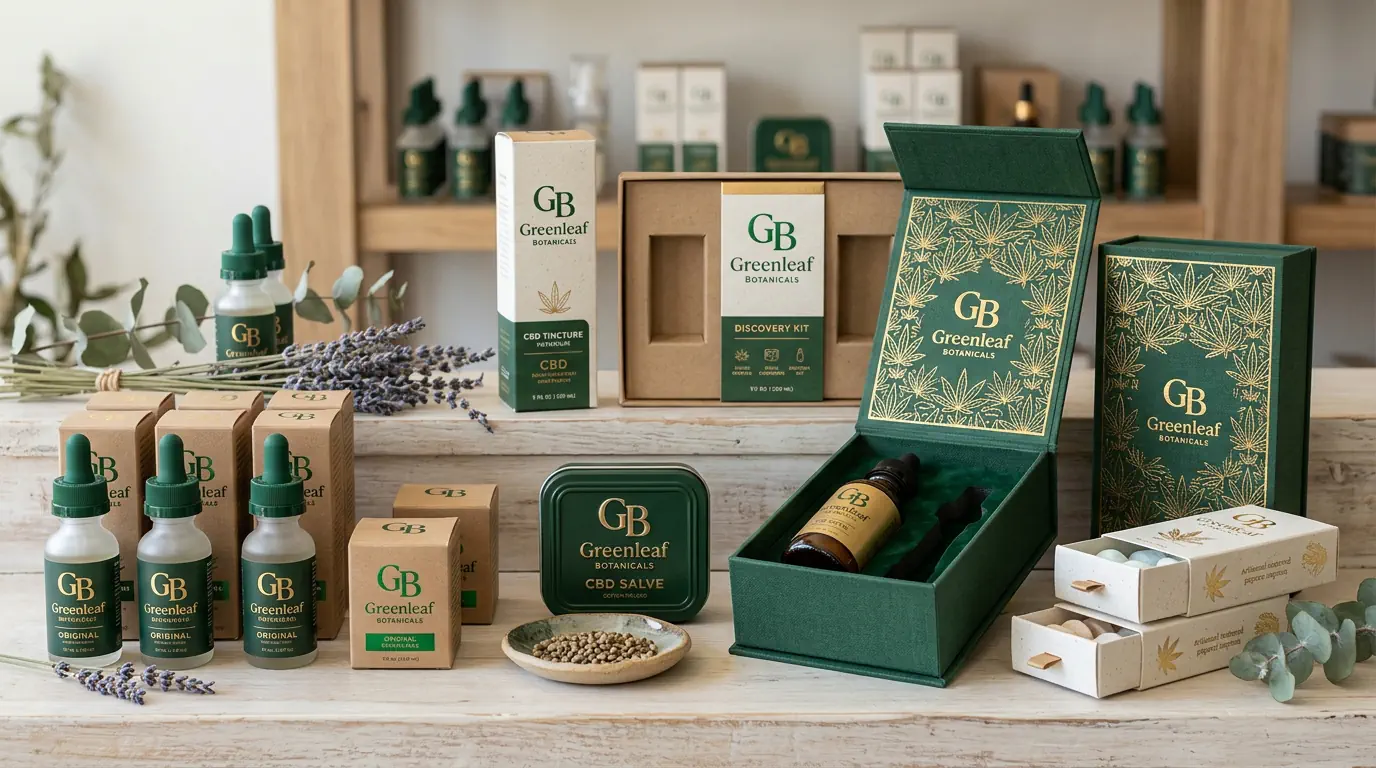
Why 2026 Is a Turning Point for CBD Packaging in Canada
If you sell or manufacture CBD products in Canada, 2026 is not a year to sit still on packaging compliance. Two critical Health Canada deadlines landed this year: the January 1, 2026, deadline requiring all products to carry updated health warning messages, and the March 12, 2026, deadline after which the actual THC and CBD quantity or concentration can no longer appear in bold font on labels. These were the final compliance milestones flowing from Health Canada’s landmark 2025 Cannabis Regulations amendments — and brands that have not yet made the transition are now operating out of compliance.
Beyond compliance deadlines, 2026 is a strategic inflection point for Canada’s legal cannabis and CBD market. The illicit market still accounts for a significant share of cannabis purchases in Canada, and regulators have explicitly acknowledged that overly restrictive packaging rules have hampered legal producers’ ability to compete on brand and shelf appeal. The 2025 streamlining amendments, now fully active in 2026, give licensed producers real new tools: transparent packaging, QR codes, differentiated container colours, co-packing flexibility, and more space for informational inserts.
This guide is written specifically for Canadian CBD brands, retailers, and packaging buyers using custom CBD boxes to build their business. We cover everything: what the law requires, what changed in 2025–2026, packaging formats that work, sustainable materials, design strategy, and why Custom Boxes Canada is the packaging partner of choice for Canadian brands.
1. Canada’s Legal Framework for CBD Packaging: The Foundation
Before your graphic designer opens a single file, your compliance team must understand the legal architecture governing CBD packaging in Canada. This is not optional knowledge — it is foundational to every packaging decision you make.
1.1 The Cannabis Act and Cannabis Regulations
The Cannabis Act (Bill C-45), which came into force on October 17, 2018, is the primary federal legislation governing all cannabis activity in Canada, including packaging and labelling. The Cannabis Regulations (SOR/2018-144), most recently amended March 12, 2025 (Canada Gazette, Part II, Vol. 159, No. 6) with regulations current to February 18, 2026, set out the specific mandatory requirements for packaging, labelling, and product information.
In Canada, CBD is not treated as a distinct substance from cannabis. Whether your CBD is derived from hemp or marijuana, it falls under the Cannabis Act framework if it meets the legislative definition of ‘cannabis.’ Hemp-derived CBD products must maintain THC below 0.3% to qualify under the Industrial Hemp Regulations, which carry different — though not absent — compliance requirements. Understanding which regulatory pathway applies to your specific product is step one for any Canadian CBD brand.
1.2 Health Canada’s Compliance Approach in 2026
Health Canada does not pre-approve individual package or label designs. Compliance responsibility rests entirely with the licensed producer or processor. Health Canada applies a risk-based enforcement approach, and as of 2026, it has adopted a more collaborative posture with industry, including eliminating mandatory CAPA submissions for minor inspection observations. However, for major or critical compliance violations (including packaging non-compliance), enforcement action remains firm. Product recalls, licence suspensions, and ministerial orders remain available tools.
The 2026 compliance environment rewards proactive brands. Those who updated packaging for both the January 1 and March 12 deadlines are well-positioned. Those who have not should treat this guide as a call to action.
2. The 2025–2026 Health Canada CBD Packaging Amendments: Full Breakdown
The March 2025 amendments to the Cannabis Regulations (SOR/2025-43) introduced the most significant changes to cannabis packaging rules since legalization. These changes are now fully active in 2026. Here is a complete breakdown of what changed and what it means for your custom CBD boxes and packaging design:
| Change Area | What Changed | 2026 Implication for CBD Brands |
| Bold THC/CBD Font PROHIBITED from March 12, 2026 | Actual THC/CBD quantity or concentration can still appear on labels, but must no longer be in bold. Prior to March 12, 2026, old bold labels were permitted under a 1-year transition. | All labels applied to products after March 12, 2026, must show THC/CBD in non-bold font. Retailers can still sell old-label stock indefinitely. |
| New Health Warnings Mandatory from Jan 1, 2026 | Updated government-approved health warning messages must appear on all newly packaged products from January 1, 2026. | Review the current Cannabis Health Warning Messages document and update all label artwork immediately if not already done. |
| Transparent Packaging Permitted | Clear (transparent) packaging and cut-out windows allowed for dried cannabis, fresh cannabis, and seeds. Edibles still require opaque packaging. | CBD flower and seed producers can now show the product. Consider window pouches and clear jars within your custom packaging range. |
| QR Codes Permitted | QR codes (and other additional barcodes) can now appear on any container, linking to any content. | Link to COAs, brand content, loyalty programs, or product education pages. A major digital brand opportunity. |
| Container & Lid Colour Flexibility | Containers and lids no longer need to be a single uniform colour — they can differ. | Design packaging with contrasting lid and body colours to improve shelf differentiation within regulations. |
| Informational Inserts Permitted | Peel-back, accordion labels, and informational leaflets can now be included with any cannabis product. | Use inserts for extended bilingual text, product guides, or brand storytelling without cluttering the primary label. |
| Simplified Potency Labelling | Only Total THC and Total CBD are required. Equivalency-to-dried-cannabis statements and ‘No expiry date determined’ language are no longer mandatory. | Cleaner, less cluttered label panels. Redirect freed space to stronger brand elements within compliance rules. |
| Co-Packing Flexibility | Multiple inner containers (dried, fresh, topical, extract) can be co-packed up to 30g total. Each inner container must remain child-resistant. | Enables gift sets, variety packs, and bundled SKUs — opening new retail and gifting product formats. |
| Packaging Date Flexibility | Packaging date on labels can vary up to 7 days before or after the actual packaging date. | Reduces operational waste from label reprints due to minor scheduling changes on the production floor. |
Looking ahead: Health Canada’s 2025–2027 Forward Regulatory Plan confirms further Cannabis Act amendments are expected, with a Canada Gazette, Part I consultation period anticipated in fall 2026. Canadian CBD brands should monitor these developments closely as additional changes to packaging and advertising rules may follow.
3. The 2026 CBD Packaging Compliance Checklist: Non-Negotiables
The following requirements apply to all cannabis-derived CBD products packaged or sold in Canada as of 2026. This checklist covers the foundational requirements every brand must meet before considering any design work on CBD packaging boxes or other packaging formats.
3.1 Child-Resistant and Tamper-Evident Packaging
All cannabis-derived CBD products (excluding cannabis plants and plant seeds) must be packaged in child-resistant containers. The mechanism must require a specific combination of force or sequential manipulation to open and must remain child-resistant after repeated use. Formal testing under recognized protocols (such as ISO 8317 or equivalent) is required to document compliance. Tamper-evident seals are mandatory to show whether a product has been opened prior to purchase.
3.2 Mandatory Principal Display Panel (PDP) Requirements
The principal display panel is the primary surface visible under normal conditions of purchase or use. It must include:
- The standardized cannabis symbol (red hexagon with THC designation) — mandatory where THC content exceeds 10 μg/g
- Brand name of the CBD product
- Total THC and Total CBD content (in mg/g or as a percentage — no longer in bold font as of March 12, 2026)
- Mandatory health warning message in a yellow-background box (updated version required from January 1, 2026)
- Class of cannabis and net weight or volume
- Licence holder name, telephone number, and email address
- Lot number or batch identifier for traceability
- Ingredients list (required for edibles and topicals)
- For edibles: a Nutrition Facts Table as per food labelling regulations
3.3 Bilingual Labelling — English and French
All required label information must appear in both English and French under federal law. This applies regardless of which province the product is sold in. Bilingual labelling covers health warning messages, product identity, ingredients, directions for use, and all other mandatory content. This remains one of the most common compliance failures among new market entrants. Build bilingual requirements into your design brief from day one — not as an afterthought.
3.4 Health Warning Messages: January 2026 Deadline Passed
This is time-sensitive: All cannabis products packaged on or after January 1, 2026, must carry the current version of the Health Canada-approved health warning messages. These are published in the Cannabis Health Warning Messages document on Canada.ca and are subject to update. The warning must appear in a yellow-background box, displayed in rotation across each type of container per brand per year, so each message appears on approximately equal numbers of containers.
3.5 THC/CBD Potency Labelling: March 2026 Rule Now Active
This is time-sensitive: As of March 12, 2026, the actual THC and CBD quantity or concentration may still be shown on packaging but must no longer appear in bold font. Licence holders who produced compliant labels prior to March 12, 2025, had a one-year transition window that has now closed. All label artwork applied to products today must reflect this change. Importantly, retailers may continue selling products labelled under the old rules indefinitely — the restriction applies to newly labelled production runs.
3.6 Branding and Visual Design Restrictions
Understanding the design restrictions enables creative compliance. Key rules active in 2026:
- No logos or brand elements larger than the standardized cannabis symbol
- No slogans in text larger than the health warning message font
- No fluorescent colours on packaging
- No raised features, embossing, decorative ridges, or engravings on the packaging surface
- No health, cosmetic, or wellness benefit claims not approved by Health Canada
- No comparisons suggesting the product is safer than tobacco or alcohol
- Packaging must not appeal to youth in design, imagery, or format
- Slogans may only use a single colour
4. Custom CBD Box Formats: Choosing the Right Packaging for Your Product
With compliance requirements understood, the next decision is format. The right custom CBD box protects your product, communicates your brand, and creates the shelf or unboxing experience that drives repeat purchases. At Custom Boxes Canada, we manufacture the full range of compliant CBD packaging formats for the Canadian market:
4.1 Custom CBD Oil & Tincture Boxes
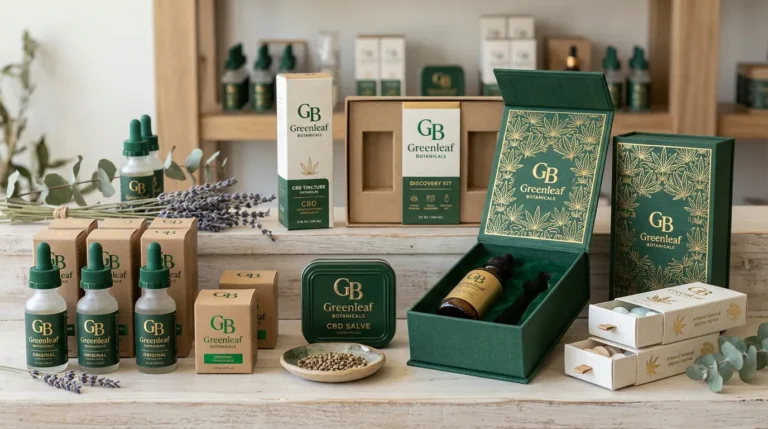
Tinctures and CBD oils are consistently among the top-selling CBD formats in Canada. Custom printed tincture boxes in kraft or premium folding board provide structural protection for glass dropper bottles, light-shielding properties for oil stability, and a premium unboxing experience that positions your brand effectively. All mandatory Health Canada information can be incorporated into a clean, bilingual label panel while leaving space for compliant brand expression. Matte lamination, soft-touch coatings, and spot UV (applied within regulations) are popular finishing options.
4.2 Custom CBD Gummies Boxes & Edibles Packaging
Edible CBD products must still use opaque packaging in 2026 — the transparent packaging amendments do not apply to edibles. This requirement protects against youth appeal. CBD gummy and edible packaging must include a Nutrition Facts Table in addition to all standard cannabis labelling requirements. Child-resistant tuck-lock folding cartons are the most popular format in this category, with sequential lot number printing and full bilingual design capabilities.
4.3 Custom CBD Capsule & Softgel Boxes
CBD capsules and softgels appeal to precision-conscious Canadian consumers seeking dosing accuracy. A pharmaceutical-inspired aesthetic — clean white or neutral-tone board, clear dosage callouts, and structured secondary cartons enclosing child-resistant primary containers — builds consumer trust and positions CBD capsule products alongside established health and wellness products on Canadian retail shelves.
4.4 Custom CBD Topical & Cream Boxes
CBD topicals occupy a unique regulatory position in Canada: they may be subject simultaneously to Cannabis Act packaging requirements and Natural Health Products (NHP) or cosmetics regulations. Brands in this category must carefully layer compliance obligations. Custom boxes for CBD topicals can leverage quality board stock and clean minimalist design to project a sophisticated wellness identity while meeting all applicable labelling requirements.
4.5 Custom CBD Mylar Pouches & Stand-Up Bags
For dried CBD flower, mylar pouches and child-resistant stand-up bags remain a practical and cost-effective solution. The 2025 amendments now explicitly permit transparent windows in pouches for dried cannabis — a direct response to industry feedback that consumers want to see the product. Odour-proof barriers are essential for compliance and freshness. Custom printed mylar pouches with your compliant brand design, sequential lot numbers, and all required Health Canada information are available through Custom Boxes Canada.
4.6 Custom Hemp CBD Packaging
For brands selling hemp-derived CBD products that fall under the Industrial Hemp Regulations or Natural Health Products Regulations rather than the Cannabis Act, packaging requirements differ but are still substantial. Custom hemp CBD packaging must meet applicable federal regulations and, in many cases, NHP or food labelling requirements for the specific product format. Always confirm the correct regulatory pathway for your hemp CBD product before finalizing packaging.
4.7 CBD Display Boxes & Retail Ready Packaging
As Canadian legal cannabis retail matures, shelf differentiation is increasingly important. Custom display boxes, counter display units (CDUs), and retail-ready packaging are a significant opportunity for brands distributing through OCS, SQDC, AGLC, and other provincial channels. These must comply with all Cannabis Regulations requirements while creating an impactful retail presence.
5. Sustainable CBD Packaging in Canada: 2026 Market Expectations
Canadian consumers increasingly factor environmental impact into purchasing decisions. Research consistently shows that a significant majority of Canadian shoppers prefer eco-friendly packaging and that a meaningful proportion will pay a premium for it. For CBD brands, sustainability is no longer a differentiator — it is a baseline expectation in the premium segment of the market.
5.1 What Health Canada Says About Eco-Friendly Cannabis Packaging
Health Canada explicitly encourages environmentally sound packaging approaches. The Cannabis Regulations permit wrappers and peel-back labels, as well as packaging materials beyond plastics — including cardboard, kraft, and other sustainable substrates — provided all regulatory requirements are met. The 2025 amendments specifically acknowledged that allowing colour differentiation between container and lid would enable producers to source more environmentally friendly packaging materials, recognising the direct link between compliance flexibility and sustainability outcomes.
5.2 Sustainable Material Options Available at Custom Boxes Canada
FSC-Certified Cardboard
Cardboard sourced from Forest Stewardship Council (FSC)-certified forests ensures responsible supply chain provenance. FSC certification can be displayed on your packaging as a trust signal that resonates with Canadian consumers.
Unbleached Kraft Paperboard
Biodegradable and fully recyclable, kraft board projects a natural, artisanal identity well-suited to premium CBD oil, topical, and hemp product packaging. It performs well across Canadian climate shipping conditions.
Post-Consumer Recycled (PCR) Board
PCR board reduces demand for virgin materials and directly communicates your brand’s commitment to circular economy principles. High-quality custom printing on recycled substrates has advanced significantly.
Compostable Bioplastic Pouches
For flexible packaging, compostable bioplastics made from PLA (polylactic acid) or other plant-based polymers break down in commercial composting conditions and are an increasingly viable option for mylar-style CBD pouches.
Water-Based & Soy-Based Inks
The inks used in printing matter as much as the substrate. Water-based and soy-based inks eliminate petroleum-derived solvents, reduce VOC emissions, and support the recyclability and compostability of the finished package.
Minimalist Design to Reduce Material Use
Beyond materials, reducing packaging complexity — fewer components, smaller structures, right-sized formats — is itself a sustainability strategy that can also reduce production costs.
6. CBD Packaging Design Strategy for 2026: Creating Brand Impact Within the Rules
Canada’s regulatory constraints are strict, but the brands that understand them deeply will find genuine creative space within them. The best custom CBD packaging in Canada in 2026 is not just compliant — it is strategically designed to build consumer trust, communicate brand identity, and create shelf presence despite the plain packaging framework.
6.1 Minimalism as a Premium Signal
Plain packaging requirements, when embraced rather than fought, create a powerful aesthetic opportunity. When every brand is working within the same regulatory constraints, the producer who executes a clean, precisely typeset, thoughtfully structured design communicates confidence and quality. Canada’s premium CBD consumer segment increasingly associates minimalism with transparency and quality — values that resonate deeply in the wellness market.
6.2 Typography as Brand Identity
When colour and imagery options are limited by regulation, typography carries a disproportionate share of brand expression. Investing in distinctive, carefully selected typefaces — chosen for both regulatory legibility and brand character — can significantly differentiate your packaging. The hierarchy of mandatory information, brand name, and secondary content should be designed as a deliberate visual system, not assembled ad hoc.
6.3 QR Codes as Digital Brand Extension
The explicit permission for QR codes in the 2025 amendments, now fully active in 2026, is one of the most strategically significant changes for Canadian CBD brands. A well-placed QR code on your custom CBD box becomes a dynamic link between your physical packaging and your digital brand universe. Use it to link to your Certificate of Analysis (COA), brand story, product education content, loyalty program, or social channels. This transforms your packaging from a static compliance document into an active consumer touchpoint that your competitors’ physical labels cannot match.
6.4 Colour Strategy Within Compliance
The 2025 amendments allow differentiated container and lid colours, and while fluorescent colours remain prohibited, you now have meaningful flexibility to design packaging with contrasting elements. Your colour palette must still create sufficient contrast with the mandatory yellow health warning and red cannabis symbol. Earth tones, deep greens, navy blues, warm terracottas, and clean neutrals all perform well within these constraints and align with the wellness and natural product aesthetics that Canadian CBD consumers respond to.
6.5 Bilingual as a Design Element
Rather than treating bilingual text as a regulatory burden that clutters your label, design-forward CBD brands in 2026 are approaching bilingualism as a visual asset — an expression of their pan-Canadian identity. Thoughtful typographic treatment of both English and French content, with consistent hierarchy and spacing, can make a bilingual label feel intentional and polished rather than forced.
7. Provincial Distribution Considerations for CBD Packaging
Federal regulations set the compliance baseline for all Canadian CBD packaging. However, each province manages its own cannabis retail and distribution infrastructure, and additional requirements or expectations may apply depending on where you distribute.
| Province / Distributor | Key 2026 Packaging & Distribution Consideration |
| Ontario (OCS) | The Ontario Cannabis Store manages provincial distribution and retail listings. OCS product submissions have specific requirements. Ensure all packaging artwork meets OCS product listing standards before submission. |
| Quebec (SQDC) | The Société québécoise du cannabis is known for conservative advertising enforcement. Bilingual compliance is especially important. Quebec consumers are strong eco-packaging adopters — sustainable materials are a competitive advantage here. |
| British Columbia (BC Cannabis / BCLDB) | The BC Liquor Distribution Branch manages wholesale. BC’s large health-conscious consumer base is among Canada’s most responsive to premium minimalist CBD packaging and sustainable materials. |
| Alberta (AGLC) | Alberta Gaming, Liquor and Cannabis manages wholesale distribution. Review current AGLC product submission guidelines. Alberta has the highest density of private cannabis retailers in Canada, making shelf differentiation particularly important. |
| Other Provinces & Territories | All provincial and territorial authorities require federal packaging compliance as a baseline. Always verify current requirements with the relevant provincial cannabis authority before finalizing national distribution packaging. |
8. Common CBD Packaging Compliance Mistakes in Canada (2026)
These are the most frequent compliance failures seen in the Canadian CBD packaging space. Each one has resulted in enforcement action, product recalls, or market withdrawal for affected brands.
⚠ Not Meeting the March 12, 2026 Bold Font Deadline
If labels applied to your production runs after March 12, 2026 still show THC/CBD content in bold font, you are now non-compliant. Audit your label artwork immediately. Note: retailers are exempt and can continue selling existing stock, but new production is subject to the rule.
⚠ Using Outdated Health Warning Messages
Health Canada updated its Cannabis Health Warning Messages document, and all newly packaged products from January 1, 2026 must carry the current version. Using superseded warning message text is a compliance failure. Verify your current warning language against the Health Canada website.
⚠ Missing or Incomplete Bilingual Text
Every mandatory element must appear in both English and French. A single-language label — regardless of where the product is sold — is non-compliant under the federal Cannabis Regulations. Build bilingual design into every project brief.
⚠ Oversized Brand Elements Relative to Cannabis Symbol
Your logo or any brand element cannot be larger than the standardized cannabis symbol. Many brands underestimate how constraining this is. Map the required symbol size first, then size all brand elements relative to it.
⚠ Non-Certified Child-Resistant Closures
A packaging mechanism that looks child-resistant is not the same as one that meets Health Canada standards. Formal testing documentation is required. Always obtain proof of child-resistance certification from your packaging supplier for your specific closure type.
⚠ Therapeutic or Health Claims on Packaging
Any claim suggesting your CBD product reduces anxiety, promotes sleep, or has anti-inflammatory properties is prohibited unless Health Canada has approved a specific health claim through the Natural Health Products pathway. Keep copy factual and product-descriptive.
⚠ Inadequate Label Adhesion in Canadian Climate Conditions
Health Canada requires labels to be securely applied and not fall off during normal use or transportation. Canada’s temperature extremes — from summer humidity to winter cold — stress label adhesion. Always test across the full temperature range your products will experience in shipping and retail storage.
9. Why Canadian CBD Brands Choose Custom Boxes Canada
Compliance is the entry cost. Brand equity is the long game. Canadian CBD brands need a packaging partner who takes both seriously. At customboxescanada.ca, our entire operation is built around the needs of Canadian producers and brands navigating a rigorous regulatory environment while building products that earn loyal customers.
Our Custom CBD Packaging Product Range
We supply the complete range of compliant, custom-printed CBD packaging for Canadian businesses. Our custom CBD boxes and packaging solutions include:
- Custom CBD Oil & Tincture Boxes — premium folding cartons with UV-protective interiors and bilingual label panels
- Custom CBD Gummies Boxes — child-resistant folding cartons with full bilingual print and Nutrition Facts Table integration
- Custom CBD Capsule Boxes — pharmaceutical-aesthetic board packaging for precision-dosing product lines
- Custom CBD Topical & Cream Boxes — minimalist wellness-market designs for NHP and cannabis-regulated topicals
- Custom CBD Mylar Pouches — odour-proof, child-resistant, with window options per 2025/2026 amendments
- Custom Hemp CBD Packaging — sustainable kraft and recycled board for hemp-derived CBD product lines
- Custom CBD Display Boxes — retail-ready counter and shelf display units compliant with provincial POP requirements
- Wholesale CBD Packaging — high-volume custom print runs with fast Canadian turnaround and no customs delays
Why Custom Boxes Canada
2026 Compliance Built In
Our team tracks every Health Canada amendment including the January and March 2026 deadlines. When you brief us, current regulatory knowledge is embedded in the project from day one — not added as an afterthought.
Bilingual Design Expertise
Our in-house design team works fluently in both English and French. Every packaging project we deliver meets Canada’s bilingual labelling requirements as standard.
Canadian Operations, Canadian Lead Times
As a Canadian packaging company, we eliminate offshore customs delays, currency risk, and quality control uncertainty. Your custom CBD boxes are manufactured and shipped within Canada, on your schedule.
Eco-Friendly Material Options
We stock FSC-certified board, unbleached kraft, post-consumer recycled substrates, and work with water-based ink systems — helping your brand meet 2026 consumer sustainability expectations.
Flexible Minimum Orders
We support CBD startups launching their first SKU and established producers scaling national distribution alike, with flexible minimum order quantities across our full custom packaging range.
10. Frequently Asked Questions: CBD Packaging in Canada (2026)
Q: What is the March 12, 2026 CBD packaging deadline about?
A: Health Canada’s 2025 Cannabis Regulations amendments gave licence holders a one-year transition period to update labels. From March 12, 2026, labels applied to newly produced products can no longer display actual THC or CBD quantity or concentration in bold font. The information can still appear — it just cannot be bolded. Retailers may continue selling products with old-format labels indefinitely.
Q: Why does the January 1, 2026 deadline matter for my packaging?
A: All cannabis products packaged on or after January 1, 2026 must carry the current version of Health Canada’s approved health warning messages. If your label artwork has not been updated to reflect the most recent warnings published on Canada.ca, your current production run is non-compliant. Check the Cannabis Health Warning Messages document immediately.
Q: Does Health Canada pre-approve my CBD packaging design?
A: No. Health Canada does not review or pre-approve individual packaging or label designs. Compliance is entirely the responsibility of the licensed producer or processor. This makes it critical to work with a packaging partner who understands current regulations and to conduct your own compliance review before going to print.
Q: Can I use transparent or clear packaging for my CBD product in Canada?
A: The 2025 amendments (now active in 2026) permit transparent packaging and cut-out windows for dried cannabis, fresh cannabis, and seeds. Edible cannabis products must still use opaque packaging to prevent youth appeal. Other product classes have their own requirements — verify for your specific product format.
Q: Are QR codes permitted on Canadian CBD packaging in 2026?
A: Yes. The 2025 amendments explicitly permit QR codes (and other additional barcodes) on any container used to package a cannabis product. The code can link to any content — product information, COAs, brand content, loyalty programs, and more. This is one of the most significant brand-building opportunities created by the recent amendments.
Q: Is bilingual labelling (English and French) mandatory across all provinces?
A: Yes. Bilingual labelling is a federal requirement under the Cannabis Regulations. It applies regardless of which province the product is sold in. Every mandatory label element must appear in both languages.
Q: What sustainable packaging options comply with Health Canada’s regulations in 2026?
A: Health Canada explicitly encourages environmentally sound packaging. FSC-certified cardboard, unbleached kraft, post-consumer recycled board, compostable bioplastic pouches, and water-based ink printing can all be designed to meet every Cannabis Regulations requirement. Custom Boxes Canada offers all of these substrates with full compliance design capability.
Q: Are more Health Canada cannabis packaging changes expected in 2026?
A: Yes. Health Canada’s 2025–2027 Forward Regulatory Plan confirms further Cannabis Act amendments are in development, with a Canada Gazette, Part I consultation period anticipated in fall 2026. Canadian CBD brands should monitor Health Canada announcements and subscribe to regulatory updates through ca*******************@******gc.ca.
2026 Is the Year to Get Your CBD Packaging Right
The Canadian CBD packaging landscape in 2026 has never been more nuanced — or more full of opportunity. Two significant compliance deadlines have now passed, raising the bar for every brand in the market. At the same time, the 2025 regulatory amendments have unlocked new creative and commercial possibilities: transparent windows, QR codes, co-packing formats, and richer informational inserts that were unavailable just eighteen months ago.
The brands that will win shelf space and consumer loyalty in Canada’s maturing CBD market are those who treat their custom CBD boxes as strategic brand investments — not just compliance obligations. The regulations are not going away. But within them, there is meaningful space for brands that invest in quality, design thinking, and consumer experience.
At Custom Boxes Canada, we manufacture compliant, custom-printed CBD packaging for brands across the country. From custom CBD oil boxes to custom CBD gummies packaging, sustainable hemp packaging to wholesale CBD display boxes, we are your end-to-end Canadian CBD packaging solution — built for the 2026 compliance environment and beyond.
Ready to upgrade your CBD packaging for 2026 compliance and beyond? Visit customboxescanada.ca or contact our packaging team today for a free consultation and custom quote.